Meilisearch
An open-source search engine that adds fast, typo-tolerant search-as-you-type to websites and apps, without the setup of Elasticsearch.
- Category
- Development
- Evaluated by
- Lay Shah
Curated external tool · Open source · Reviewed November 2026
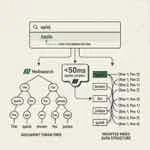
Meilisearch is a search engine you add alongside your database. You send it your products, articles or records, and it returns results as people type, even when they misspell a word.
Official links: Visit Meilisearch · Documentation · GitHub repository.
Why not just use the database?
Database search, such as SQL LIKE or PostgreSQL full-text search, is fine for simple cases. It struggles with typos, partial words typed so far, and ranking results in a way that feels right to people.
Elasticsearch and OpenSearch solve those problems but are large systems to run and tune. Meilisearch sits in between: it is one program with sensible defaults that you can run on a small server.
What it does
- Search-as-you-type with typo tolerance turned on by default.
- Ranking rules you can read and change, for example putting in-stock products first.
- Filters and facets, such as price ranges, categories and counts per category.
- Synonyms and stop words.
- Official client libraries for JavaScript, Python, PHP, Ruby, Go and other languages.
How it runs
Meilisearch is written in Rust and ships as a single program. It stores its index on disk and lets the operating system cache it in memory, so it does not need a large amount of memory reserved up front. A hosted version, Meilisearch Cloud, is available if you would rather not run it yourself.
Things to know before you choose it
- It is built to answer searches quickly, not to take in data quickly. Large batches of updates can take a while to index.
- It is not meant for log analysis or huge streams of events. Use a tool built for that.
- The free version runs on one server, so very large data sets need planning.
- Your database stays the source of truth, so you need a way to keep the search index up to date when data changes.
Where it fits
It is a strong choice for shop catalogues, documentation sites, directories and internal dashboards where people need to find things quickly and do not always type them correctly.